Fleabag-ified Antigone: Deconstructing Tragedy at New Diorama
Sophocles’ Antigone, a timeless meditation on law, morality, and individual conscience, has resonated through millennia. Yet, what happens when a contemporary playwright strips away its classical grandeur, divine intervention, and even its iconic antagonist, Kreon? Lulu Raczka’s reimagining of Antigone at the New Diorama Theatre does precisely this, offering a startlingly secular, demythologized, and profoundly personal interpretation. This production doesn't just adapt the ancient text; it interrogates the very nature of tragedy itself, leading to an experience that, while initially perceived as uneven, ultimately reveals layers of profound ethical struggle.
Deconstructing the Classical: A Secular Vision of Conflict
Raczka’s boldest move is her decision to forego nearly all classical elements that define Sophoclean tragedy. There is no omnipotent Kreon to embody the state’s unyielding law, no sense of hubris leading to a divinely ordained downfall, and no explicit punishment by the gods. We are as far removed from Sophocles’ worldview as conceivably possible. For audiences accustomed to the weighty pronouncements and grand fates of Greek drama, this immediate dismantling of tradition can feel jarring, perhaps even leading to an early impression of an uneven Antigone review. It’s a deliberate choice that shifts the epic, societal conflict to an intimate, internal battleground.
By removing the external, divine framework, Raczka forces the audience to confront the human condition in its rawest form. The conflict is no longer between mortals and gods, or even between state and individual, but rather between the self and its conscience, between conflicting moral imperatives within the human heart. This secularization doesn't diminish the tragic stakes; instead, it amplifies the devastating impossibility of human choice when confronted with absolute moral demands. It asks: in a world without gods, where do our ethical obligations truly lie, and what is the cost of upholding them?
The Intimacy of Conflict: Antigone and Ismene in the Sandbox
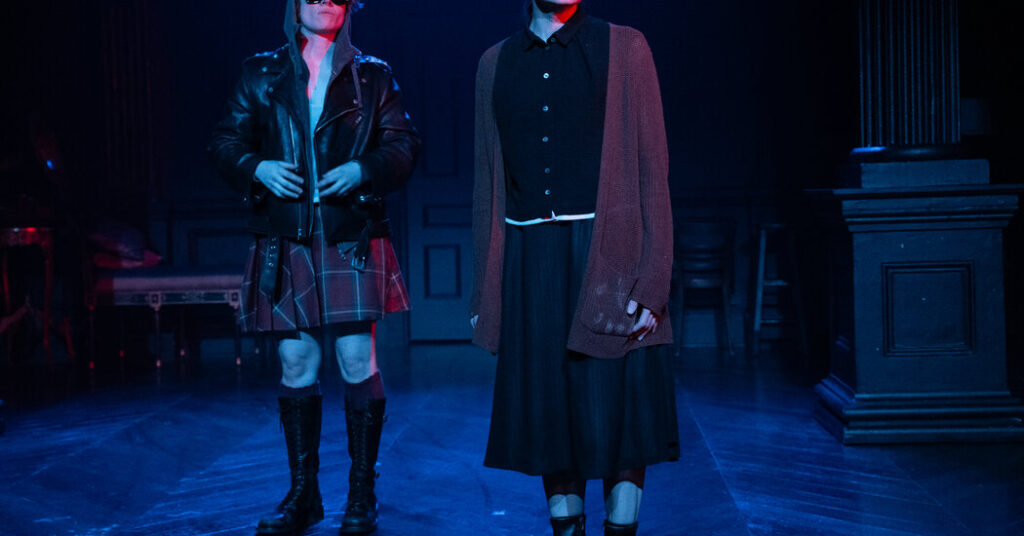
The staging at the New Diorama underscores this shift from the cosmic to the deeply personal. The performance unfolds almost entirely within a sandbox-like circular pit, a space that evokes both childhood innocence and the solemnity of a grave. This confined setting immediately draws the audience into the sisters’ claustrophobic world, making their extended dialogue the absolute core of the play. Here, the ethical battle truly takes place between Antigone and her sister Ismene, transforming what was once a prelude into the entire dramatic landscape.
The physicality of the sisters within this sandbox is crucial. We witness them dancing together in an exaggerated, childlike fashion, imitating sexualized displays from television – a poignant blend of innocence and burgeoning awareness of transgression. This aspect of physical boundary-crossing remains a feature throughout, culminating in Antigone’s visceral act of breaking into what will become her own tomb. With a powerful heave, she lifts a trapdoor, upending the sandbox – a symbolic act of disturbing both her childish past and the earthly order. She is not a grave robber but an interrer, determined to return her twice-defiled brother, Polyneices, to the family crypt, in defiance of Kreon's decree. In this intensely physical, almost primal act, Antigone buries not only her brother but, metaphorically, herself.
Ismene, in contrast, represents the security of inaction, choosing self-preservation while simultaneously bearing the psychological burden of her sister's solitary stand. The dynamic between them is captivating, highlighting the devastating impossibility of Antigone’s dual roles as both a loyal daughter to her lineage and a fiercely independent sister. The extended dialogue, while potentially feeling slow or confined to those expecting a broader narrative, functions as a magnifying glass, intensifying the psychological depth of their struggle and the profound ethical chasm between them. It forces the audience to dwell on every nuance of their agonizing choices.
The Fleabag-ification: Rawness, Realism, and Revolutionary Spirit
The descriptor "Fleabag-ified" is apt for this production. It suggests a stripping away of theatrical artifice, a direct and often uncomfortable intimacy with the characters’ inner lives, and a focus on raw, unfiltered human experience. Much like Phoebe Waller-Bridge’s groundbreaking series, Raczka’s Antigone foregrounds personal, often messy, motivations and consequences, making the ancient tale feel startlingly immediate and relatable. This isn't Antigone as an abstract ideal; it's Antigone as a struggling, deeply human individual grappling with an unbearable moral imperative.
Antigone’s protest in this context becomes a profound challenge to the living, not merely a defiance of law. In asserting her right to bury her brother, she simultaneously affirms her own life while consciously forfeiting it. This isn't a tragedy of easy answers but of mutual impossibilities and irresolvable paradoxes. Her revolutionary spirit doesn't stem from a grand political agenda, but from an unwavering commitment to seeing her truth through to its absolute, logical endpoint, regardless of the personal cost. The true beauty and tension of this portrayal lie not in her certainty, but in the profound uncertainty that accompanies such an irrevocable decision. She is not a martyr defined by fate, but a woman making an impossible choice with her eyes wide open.
Navigating the 'Unevenness': A Deliberate Artistic Choice?
Upon initial viewing, some might find the production oddly "out of sync" with conventional expectations. Reducing the epic scope to an extended encounter between two sisters, and arguably rendering Antigone "more rather than less opaque" in the process, could indeed contribute to an uneven Antigone review. Traditionalists might miss the broader political context, the Greek chorus, or the dramatic arc defined by external events.
However, upon deeper reflection, this perceived unevenness transforms into a deliberate artistic choice. What might initially seem like a reduction is, in fact, a radical refocusing. By stripping away external elements, Raczka elevates the internal ethical struggle to paramount importance. The opacity of Antigone is not a flaw but a reflection of the profound, often inexplicable nature of deep conviction. She becomes a mirror for the audience to project their own understanding of sacrifice, justice, and the boundaries of personal responsibility.
This uneven Antigone review, therefore, should acknowledge that the play demands a different kind of engagement. It doesn't offer the comforting catharsis of classical tragedy but rather the unsettling provocation of modern realism. It challenges viewers to move beyond a search for familiar narrative beats and instead immerse themselves in the raw, personal, and devastatingly human cost of adhering to an immutable moral code. It is an experience that lingers, forcing continuous reconsideration of what truly constitutes tragedy in our demythologized world. For further exploration of how Antigone is being reimagined today, consider reading Antigone Reimagined: New Diorama vs. Park Theatre's Bold Visions and Antigone On Strike: Modern Takes on Justice & Sisterhood.
In conclusion, Lulu Raczka’s Antigone at the New Diorama Theatre is not an easy play, nor is it meant to be. Its deliberate departure from classical norms, its intense focus on sisterly dialogue within a confined space, and its "Fleabag-ified" intimacy create a challenging yet ultimately rewarding theatrical experience. While it may initially strike some as an uneven Antigone review, its power lies precisely in its willingness to shatter expectations and force a re-evaluation of what tragedy means in the 21st century. It’s a production that speaks to the enduring, universal struggle of conscience, making an ancient story feel profoundly new and unsettlingly personal.