Antigone Reimagined: New Diorama vs. Park Theatre's Bold Visions
In the realm of classical theatre, few narratives resonate with the timeless urgency of Sophocles’ Antigone. Its core dilemma—the individual's conscience against state law, family loyalty versus civic duty—continues to inspire countless reinterpretations across generations. This season, London stages offered two particularly audacious takes on the ancient Greek tragedy: Lulu Raczka’s secularized vision at the New Diorama Theatre and Alexander Raptotasios’s politically charged Antigone [on strike] at the Park Theatre. Both productions bravely stripped away traditional elements, daring to ask what Antigone means for a contemporary audience. Yet, as with many ambitious adaptations, these reimagined narratives inevitably present an uneven Antigone review, showcasing both brilliant insights and challenging departures from the source material.
The New Diorama's Deconstructed Antigone: An Internal Struggle
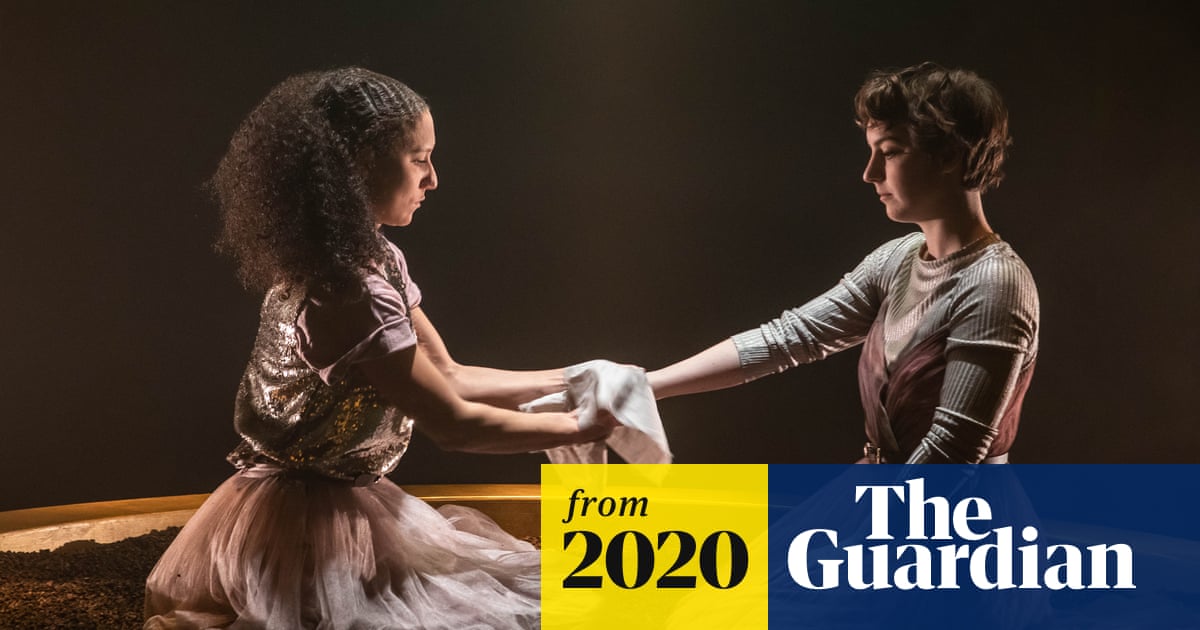
Lulu Raczka's contemporary re-working of Sophocles' tragedy at the New Diorama Theatre was nothing short of a radical departure. Her most striking choice was to forego the classical elements of tragedy altogether: there was no Kreon, no overarching sense of hubris leading to a fall, and no direct punishment by the Gods. We are as far removed from Sophocles’ traditional worldview as possible, creating a starkly secularized, demythologized, and, as some might say, "fleabag-ified" Antigone. The performance unfolded almost entirely as an extended dialogue between Antigone and her sister Ismene, staged within a sandbox-like circular pit, emphasizing a confined, intimate world.
Initially, this approach could feel jarring, even "out of sync" with conventional expectations. Reducing the monumental scope of Antigone to a sisterly exchange might seem to diminish its power, rendering Antigone herself more opaque rather than illuminating her motivations. However, upon deeper reflection, something profound is gained. By internalizing the ethical battle entirely between the two sisters, Raczka brings into sharp focus the devastating impossibility of Antigone’s dual roles as both daughter and sister. The struggle becomes intensely personal, a tragic predicament played out not on a battlefield, but within the confines of familial loyalty and individual conviction.
The play opens with a poignant, almost childlike scene, as Antigone and Ismene dance together, mimicking sexualized displays seen on television. This playful innocence quickly gives way to the gravity of physical transgression, a theme that persists throughout. Antigone’s journey is one from immaterial fantasy to the harsh reality of physical action, while Ismene grants herself the security of inaction, albeit burdened by its own lack of consequences. The pivotal moment arrives as Antigone, with a great heave, lifts the lid of a trapdoor, upending the sandbox. This symbolic act sees her breaking into what will be her own tomb—an inverted grave robber, not there to remove a body, but to inter her brother in the family crypt, defying a decree to leave his corpse defiled. In this act, she buries not only her brother but, implicitly, herself, affirming her life by forfeiting it.
Raczka’s Antigone is a true revolutionary, not just for her willful act, but for her unwavering commitment to its logical endpoint, no matter the cost. The beauty and tension of this production lie not in her certainty, but in her profound uncertainty, her willingness to navigate an irresolvable paradox. For a deeper dive into this unique production, explore our detailed analysis: Fleabag-ified Antigone: Deconstructing Tragedy at New Diorama.
Park Theatre's Political Antigone [on strike]: A Modern Crisis
In contrast to the New Diorama’s introspective focus, the Park Theatre’s Antigone [on strike], developed by writer and director Alexander Raptotasios, thrusts the ancient tragedy into the heart of contemporary socio-political discourse. Inspired by discussions at schools in East London, this modern-day reimagining directly grapples with the ambiguous power of public opinion and the tension between citizens' views and basic human rights.
The core conflict mirrors Sophocles’ original but with a chillingly modern twist. Here, Antiya (played by Hiba Medina) stages a hunger strike in support of her sister Esmeh (Hanna Khogali), an 'ISIS bride' who has lost her UK citizenship due to involvement with Iraqi jihadis. This immediate, headline-grabbing premise replaces the classical decree against burial with a contemporary issue fraught with ethical and political complexity. The modern Kreon figure is embodied by an ambitious Home Secretary, whose son, human rights activist Eammon (Ali Hadji-Heshmati), also happens to be Antiya’s boyfriend. This intricate web of personal relationships, political power, and legalistic decisions creates a resonant backdrop for the timeless themes of liberty, duty, and justice.
Raptotasios’s adaptation directly engages with questions that plague modern societies: Should the views of citizens dictate all governmental decisions, or are public attitudes too easily manipulated to override fundamental rights? By framing the tragedy around an 'ISIS bride' and issues of citizenship, the production forces audiences to confront uncomfortable truths about national identity, accountability, and compassion in an age of global conflict and heightened security. The hunger strike, a historically potent form of non-violent protest, becomes Antiya’s equivalent of Antigone's defiant burial, a public act of conscience against the state's seemingly unyielding authority.
Bridging the Ancient and Modern: A Comparative Look
Both the New Diorama and Park Theatre productions exemplify the enduring power of Antigone, yet their distinct approaches reveal the challenges and triumphs inherent in adapting such a seminal work. Where Raczka's play strips down the external world to amplify an internal, existential struggle, Raptotasios's version expands the context to explicitly address global, political controversies.
The New Diorama’s strength lay in its raw, intimate portrayal of sisterhood and the psychological toll of impossible choices. Its "uneven Antigone review" might stem from its deliberate abstraction, which could be exhilarating for those open to a radical deconstruction, but potentially frustrating for audiences seeking more direct narrative parallels to Sophocles. The intensity of the two-hander, while powerful, could also be perceived as limiting the narrative's breadth, making Antigone's revolutionary spirit almost an isolated, internal rebellion rather than a public challenge.
Conversely, the Park Theatre’s Antigone [on strike] shone in its immediate relevance. By directly engaging with topics like 'ISIS brides,' citizenship stripping, and human rights, it delivered a powerful socio-political commentary that felt urgent and necessary. However, the potential "unevenness" here could arise from the sheer weight of contemporary issues. Does the modern context ever overshadow the profound philosophical and ethical dilemmas that lie at the heart of Antigone's story? The ambition to be current is commendable, but sometimes the complexity of modern politics can risk simplifying the nuanced moral quandaries of the original tragedy, making the classical framework a vehicle rather than an integrated whole. The question becomes whether the adaptation truly serves the core Antigone narrative or uses it primarily as a springboard for topical debate.
Ultimately, both productions, despite their individual strengths and the inherent mixed reactions (contributing to an uneven Antigone review for each), underscore the adaptability of classical texts. They demonstrate that reimagining does not necessarily mean diluting, but rather re-contextualizing, allowing new generations to grapple with universal questions through contemporary lenses.
The Enduring Legacy of Antigone Reimagined
Sophocles’ Antigone, written around 441 BC, remains a powerful testament to humanity's timeless struggles. These two bold productions from the New Diorama and Park Theatre remind us that the story of a young woman defying unjust laws for familial and moral conviction is perpetually relevant. They serve as vital artistic endeavors, pushing boundaries and forcing audiences to engage with uncomfortable truths, both ancient and modern. To truly appreciate such adaptations, audiences are encouraged to approach them with an open mind, seeking not a faithful recreation, but a dialogue between past and present. For creators, these plays offer a valuable lesson: understanding precisely which classical elements to retain, which to discard, and what new insights can be unearthed in the process, is key to a compelling, if sometimes uneven, modern retelling.
Whether focusing on the deeply personal ethical quagmire or the broad strokes of socio-political conflict, Antigone's cry for justice echoes on. For a closer look at how Antigone [on strike] navigates these contemporary challenges, read our article: Antigone On Strike: Modern Takes on Justice & Sisterhood.